Where should you store your life insurance policies?
Storing a life insurance policy is not about security alone. It is about whether your family can reach the document on the worst day of their lives. Here is what works.
June 24, 2026 · 7 min read
There are two competing requirements when you store a life insurance policy: it needs to be safe, and it needs to be findable by someone other than you at the exact moment you are no longer available to point them to it. Most storage advice optimizes only for the first one, which is why so many policies go unclaimed.
Safe deposit box: safe, but often unreachable
A bank safe deposit box is excellent protection from fire, flood, and theft. It is a poor place for a life insurance policy. In several states the box can be sealed on notice of the owner's death until an executor produces court paperwork, and if your spouse is not a registered co-lessee they may not be able to open it at all. Weeks can pass before anyone sees the document inside.
Home fireproof safe: better, with a catch
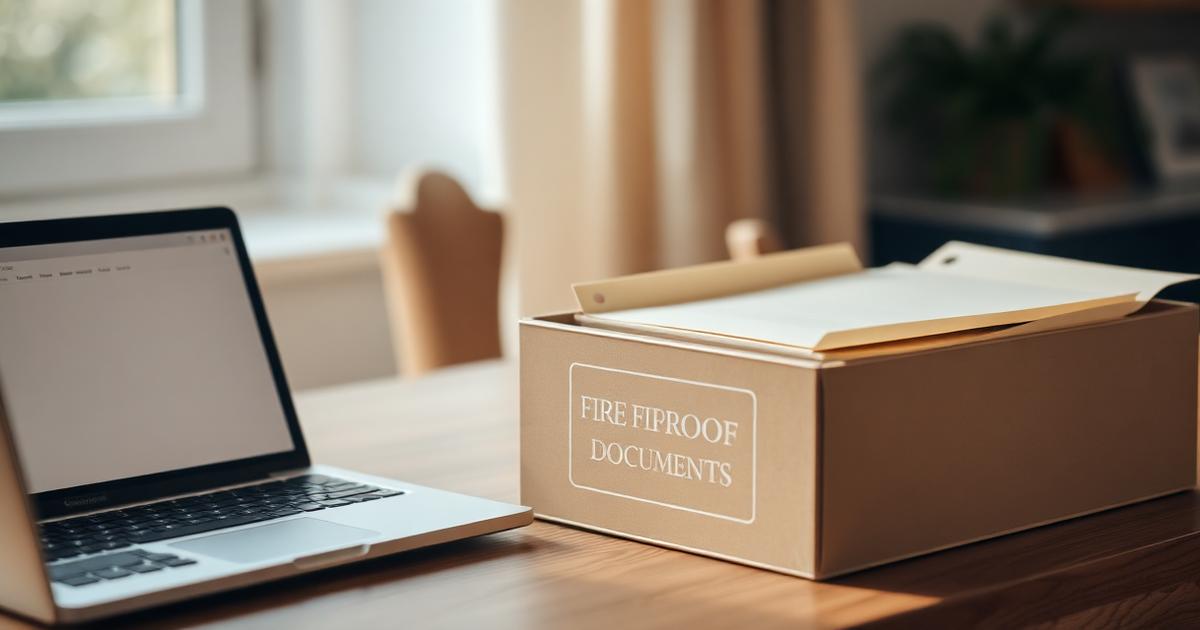
A home safe rated for at least one hour at 1700°F handles most household disasters and stays accessible to your family. The catch is the combination. If only you know it, the safe is a locked box in the corner of a house full of grieving people. Write the access instructions down somewhere separate and tell at least two people.
Filing cabinet or desk drawer: findable, fragile
The classic shoebox approach wins on accessibility and loses on everything else. Paper fades, gets thrown out during a move, gets water-damaged in a basement, and gets separated from the carrier contact information that makes it useful. It is better than nothing only if someone knows the drawer exists.
With your attorney or agent: reliable, but incomplete
An estate attorney will keep an original with your will, and your agent has a copy in their file. Both are good backups. Neither is a system. Agents retire, change agencies, and lose books of business. Attorneys need to be found and paid before they will release anything. And neither one will proactively call your family.
Encrypted digital vault: accessible by design
A digital vault solves the access problem directly: the document lives in an encrypted account, and you decide in advance who can open it. There is no combination to remember, no box to seal, no drawer to clean out. The one real requirement is that the vault must let you grant access to another person — a personal cloud drive nobody else has a login to has exactly the same failure mode as the safe.
The recommended setup
- Keep the original signed policy in a home fireproof safe, and give the access code to your spouse and one other trusted person.
- Scan every policy, declaration page, and beneficiary confirmation.
- Store the scans in an encrypted vault with a named trusted contact who has view access.
- Record the carrier, policy number, claims phone number, and agent contact alongside each document.
- Review the whole set once a year and after every major life event.
EverKeep exists for steps two through five. Upload the policy once, name a trusted contact, and the document is where your family can reach it — with the carrier's claims number attached, not sitting in a drawer nobody thought to open.
Keep every policy your family owns in one place.
EverKeep is the free vault for your family's insurance documents — so the people you love never have to go searching.
Start your free vault